What Is Production Reliability?
What is production reliability in software engineering? Learn how teams assess a software change using production behavior, dependencies, testing, and operational context.
Most teams have several ways to decide whether a change is ready to ship. There is code review, automated testing, static analysis, security checks, CI, observability, and deployment controls. All are useful, but they answer different questions.
Production reliability asks a broader question: what does this change mean for the reliability of the system when it reaches real production?
What production reliability means
Production reliability is the ability of a software change to behave correctly and consistently under real production conditions. That means looking beyond changed lines and considering affected components, dependencies, production traffic, testing, recent changes, incident history, runtime behavior, and deployment or rollback conditions.
Reliability is not the same as test results
A passing test suite tells you that covered scenarios behaved as expected. It does not automatically tell you whether an important dependency was missed, whether production traffic differs from tests, whether a shared component has a large blast radius, or whether rollback is difficult. Testing is evidence. Production reliability combines that evidence with context.
A practical model
A useful model is:
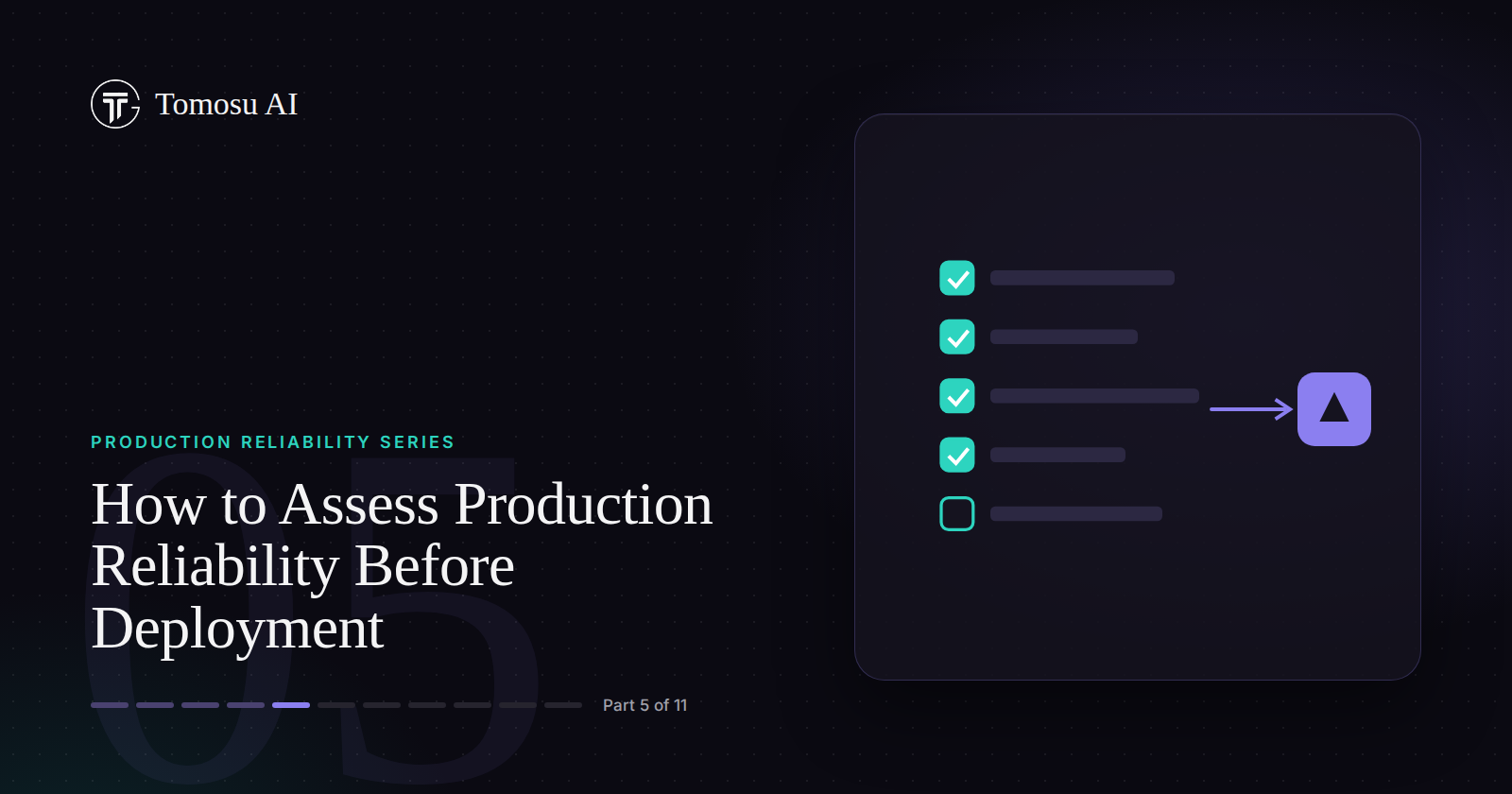
Change → Evidence → Uncertainty → Action
Understand the change, gather evidence, identify what remains uncertain, then decide whether to merge, test more, investigate, change the rollout, or proceed.
Production Reliability Index
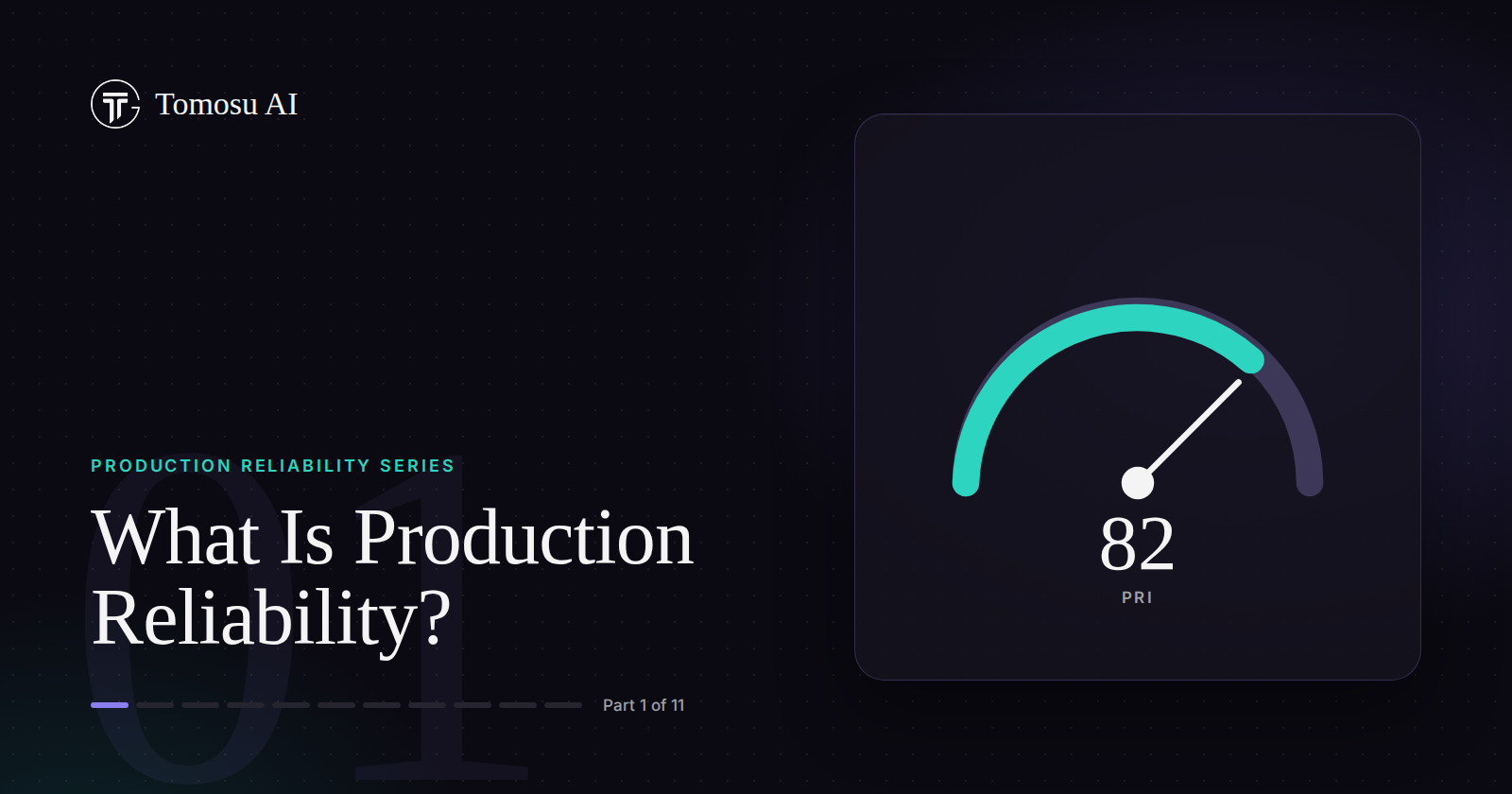
Tomosu uses the Production Reliability Index (PRI) to bring several reliability signals together, including Fragility Index, Drift Index, Governance Compliance, Runtime Signals, Code Volatility, Deployment Velocity, and Escalation. The score is a summary of evidence, not a replacement for engineering judgment.
The main idea
Production reliability is not one more check after code review. It is a way of looking at a software change in the context of the production system it is entering.
The useful question is not simply “does the code work?” It is: “What does this change mean for production, and what evidence do we have before we ship it?”
Explore the Production Reliability Index: https://tomosu.ai/start