Production Reliability vs Code Review
Production reliability and code review answer different questions. Learn how change context, dependencies, production behavior, and blast radius complement traditional code review.
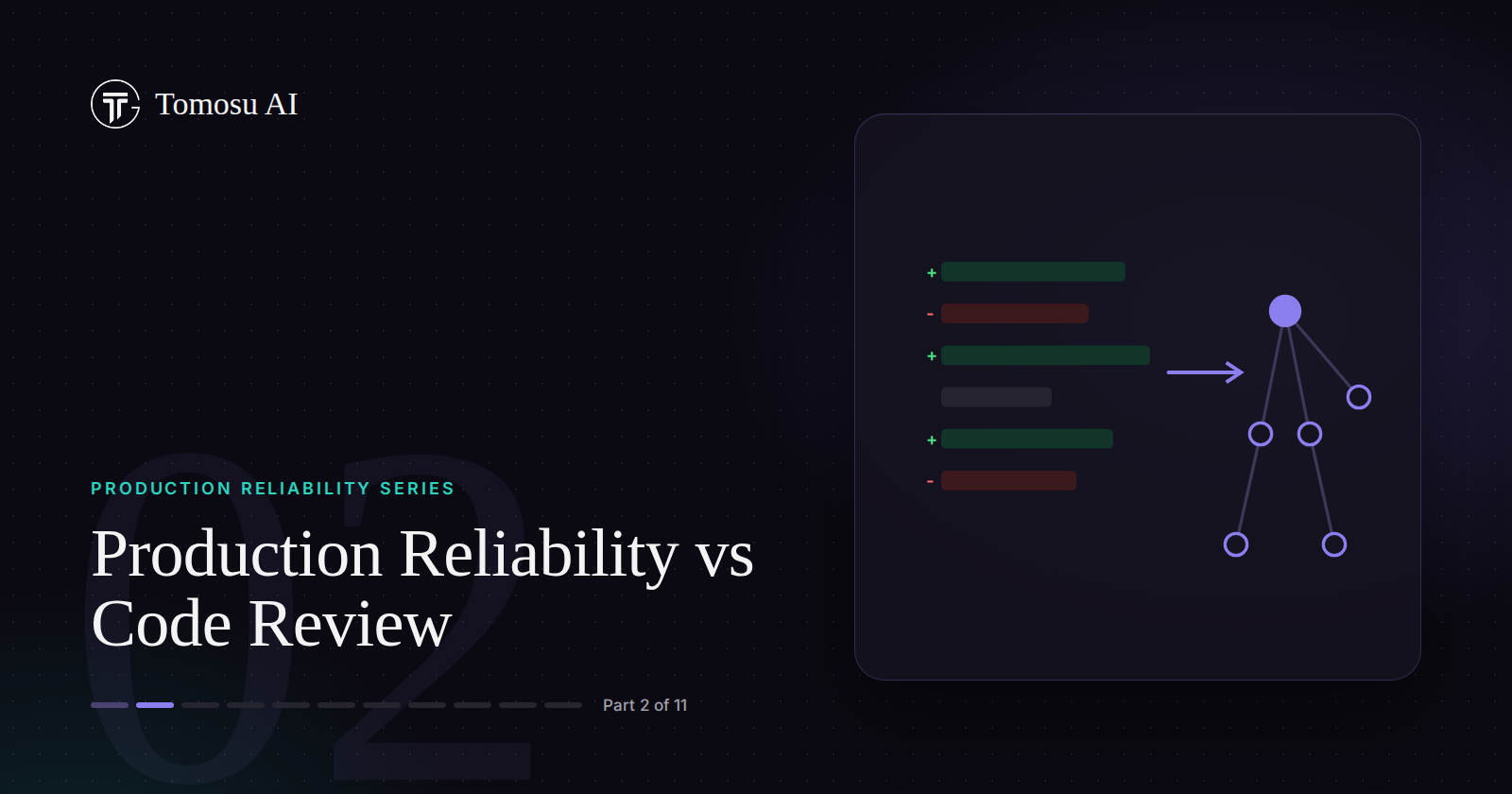
Code review is primarily about the implementation: is the logic correct, is the code understandable, does it follow conventions, and are there obvious bugs?
Production reliability adds a different layer: which services and components are affected, which dependencies matter, how widely the component is used, what production behavior exists, whether the area has caused incidents, and how easy rollback would be.
A small diff can have a large impact
A few changed lines in a shared authentication library can affect hundreds of services. Diff size is therefore not the same thing as production impact.
AI generated code makes the distinction clearer
AI coding tools can increase change volume. A reviewer may determine whether generated code looks correct, while production reliability analysis asks what that code touches outside the diff and what could happen when it reaches production.
Production aware code review
A practical workflow combines implementation review with affected components, dependencies, production usage, testing evidence, incident history, and deployment conditions.
Production Reliability Index
Tomosu's Production Reliability Index (PRI) summarizes reliability signals around a change. It is another signal for understanding production implications, not a replacement for code review.
Explore PRI: https://tomosu.ai/start