Production Reliability vs Static Analysis
Production reliability and static analysis answer different questions. Learn how code analysis, production context, dependencies, testing, and runtime behavior work together.
Static analysis examines source code without executing it. It can catch coding errors, suspicious patterns, type problems, security issues, maintainability problems, and policy violations.
What it does not know automatically
Static analysis does not automatically have the full operational context of production: how many services depend on a component, what traffic reaches it, whether the area has caused incidents, or how difficult rollback would be.
Example
A small change in a shared authentication library may pass static analysis while still having a wide production reach. Dependency usage, production traffic, incident history, and testing coverage add context that is not contained in the diff alone.
Use the layers together
Static analysis gives code evidence. Testing gives verification evidence. Production context gives impact evidence. Runtime signals give operational evidence. Incident history gives historical evidence.
AI generated code
Static analysis can check generated code for known issues, code review can examine implementation, and production reliability analysis can examine what the generated change touches.
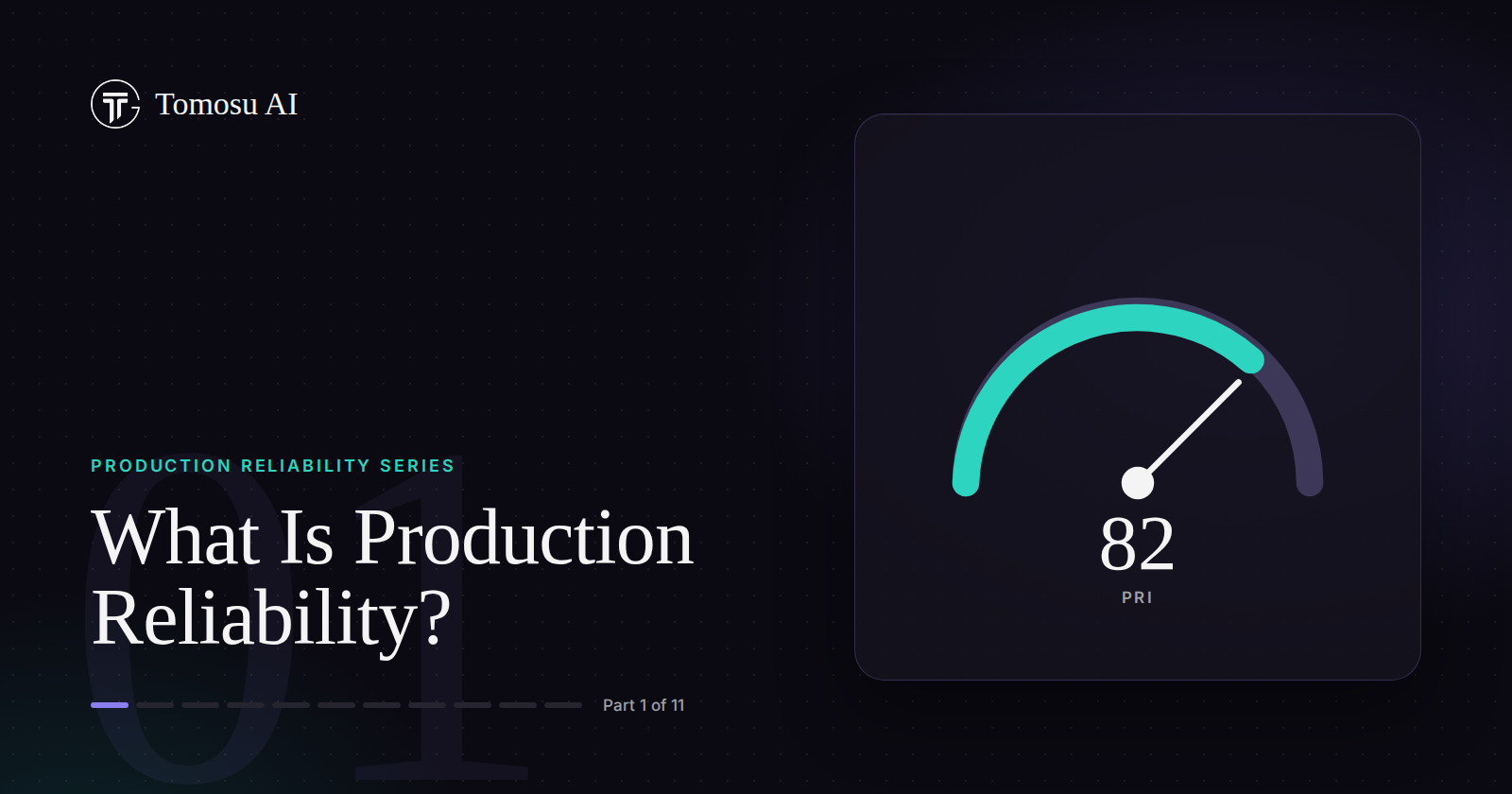
Tomosu's Production Reliability Index (PRI) is designed to combine reliability signals around a change.
Explore PRI: https://tomosu.ai/start